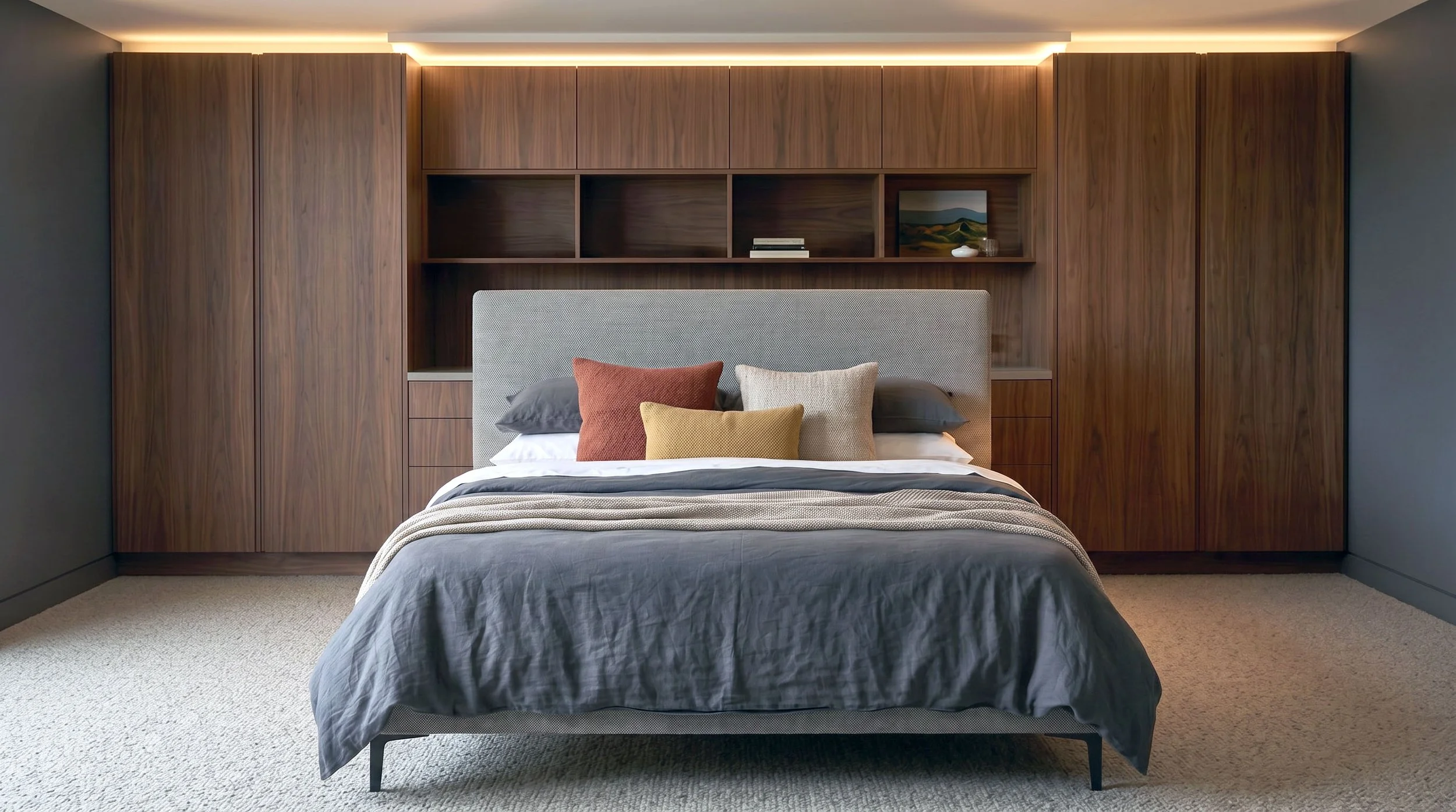
A secondary suite adds income, flexibility, and lasting value to your home. A basement renovation transforms underutilized space into something your household actually uses every day. Whether you're building one or the other, or a combination of both, the result is a home that works harder for you.
What’s Involved
Done well, this kind of project quietly changes the calculus of homeownership. A legal suite generates income. A finished lower level gives your family room to breathe. There's a version of your home that works harder and feels more complete, and for a lot of homeowners, that version starts with what's already there.
What to Expect From Us
Every secondary suite or basement renovation comes with its own set of site-specific considerations — whether that's moisture and ceiling height in a below-grade space, natural light in a garden suite, or how an in-home suite integrates with the rest of the house. We'll help you figure out what's possible in your specific space and what it takes to get there.
Our Process
Overview
The underlying approach to how we treat you and your home remains rooted in the same care, attentiveness and expertise we express in every job.
-
The first step is simple — reach out and tell us about your project. We'll have a conversation to understand what you're after, answer any early questions, and figure out whether we're the right team for the job.
-
We come to you and walk the space in person before putting anything on paper. This is where we ask the right questions, assess what's involved, and start building a clear picture of your project.
-
After the consultation we put together a detailed, itemized quote — not a ballpark. We walk you through every line together so you have a full understanding of the scope before committing to anything.
-
Once you're ready to go, we get you on the schedule and walk you through exactly what to expect from start to finish. Before work begins, you'll have a clear picture of the timeline, who will be on site, and how the project will unfold.
-
Throughout the build you'll always know what's happening and why. We keep the site tidy at the end of every day, the updates regular, and handle anything unexpected with honesty and care.
-
When the work is complete we do a thorough walkthrough together and take care of any final touches before sign-off. Everything we build is backed by our two-year workmanship warranty.
FAQs
Common questions we receive about basement and secondary suite renovations
-
A few questions worth thinking through before the consultation: Is the space for your own use or will it be rented out? Do you need a fully self-contained suite, or just additional living space? How much natural light does the basement get, and are there windows that could be enlarged? What is the ceiling height — and is it consistent throughout? Is there any existing moisture history?
These questions shape what's realistic and what the space can become. We'll work through all of them with you during the on-site visit so you go into the project with a clear picture of your options.
-
Costs vary significantly depending on the size of the space, its existing condition, and what you're building. As a general guide:
Basic finishing (framing, drywall, flooring, paint): $40,000–$70,000
Mid-range with bathroom and full finishes: $70,000–$120,000
Legal secondary suite including kitchen, bathroom, and separate entrance: $90,000–$150,000+
Basements in older homes across the North Shore and Greater Vancouver often present additional considerations — moisture management, ceiling height limitations, and outdated systems — that can affect the final number. We assess all of this during the site visit before putting a quote together.
-
A standard basement finishing project typically takes 6–10 weeks for construction. A legal secondary suite, which involves permits, licensed trades, and inspections at multiple stages, generally takes 4–6 months from start to finish — with permit approval alone often taking 6–10 weeks depending on the municipality.
We build a realistic schedule before work begins and keep you informed at every stage so you always know where the project stands.
-
Requirements vary slightly by municipality, but across the North Shore and Greater Vancouver a legal secondary suite generally must:
Be located in a zone that permits secondary suites
Have a separate, private entrance
Include its own kitchen, bathroom, and sleeping area
Meet minimum size requirements (typically at least 37m² / 400 sq ft)
Meet minimum ceiling height requirements (generally 1.98m / 6'6" in habitable areas)
Meet BC Building Code requirements for fire separation, ventilation, plumbing, and electrical
Be approved through a full building permit and pass all required inspections
A suite is not considered legal until final inspection has been passed — regardless of how complete or well-built it looks.
-
For any work beyond basic cosmetic updates, yes. In Greater Vancouver, a building permit is required for basement renovations that involve framing, insulation, drywall, plumbing, electrical, or any change of use — including converting a storage area to habitable space. This applies across municipalities including North Vancouver, West Vancouver, Vancouver, East Vancouver, and Burnaby.
Skipping permits might seem like a shortcut, but unpermitted work can void your home insurance, create issues when you sell, and leave you responsible for any non-compliant work done by previous owners. We pull all required permits and coordinate all inspections as part of the project.
-
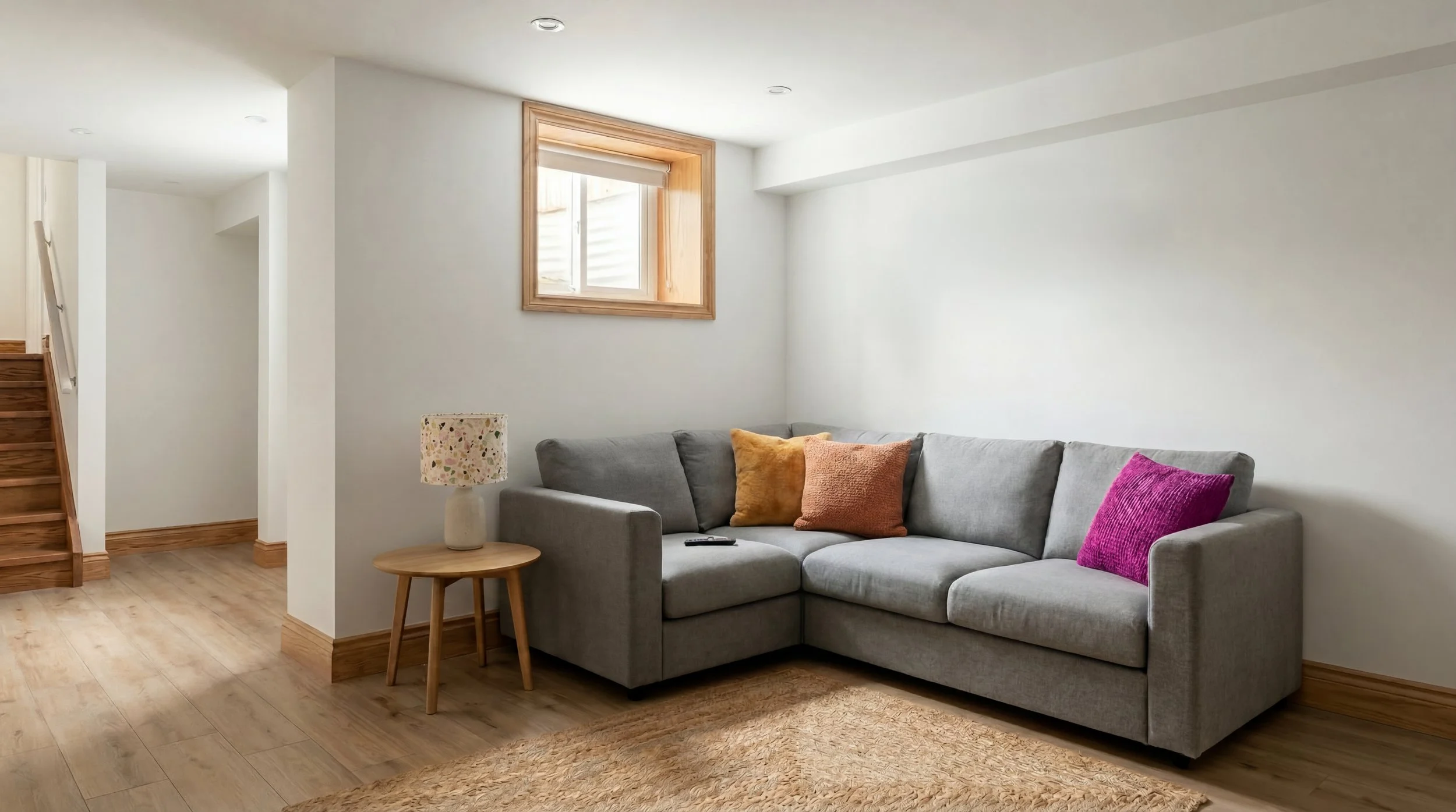
It comes down to a few key things. Lighting is the biggest factor. A well-lit basement with a mix of recessed lighting, wall sconces, and task lighting feels completely different from one relying on a single overhead fixture. If there are windows, maximizing their size where possible brings in natural light and makes a meaningful difference to how the space feels.
Ceiling height matters too; even small increases can change the feel of a room significantly. Where full underpinning isn't in the budget, being strategic about where bulkheads sit and using consistent ceiling heights throughout can help. Material choices also play a role: warm flooring, quality trim, and finishes that match the rest of the home rather than signalling "basement" go a long way. The goal is a space that feels like a natural extension of the house.
-
The biggest one we see is not properly assessing moisture before work begins. Finishing over a basement that has existing or potential water intrusion issues is a costly error — one that tends to reveal itself long after the walls are closed up. A thorough site assessment before anything is designed or quoted is essential.
Choosing the wrong materials is another common issue. Not all flooring, insulation, and drywall products perform the same way in a below-grade environment. What works well upstairs can fail in a basement where humidity, temperature fluctuations, and the occasional moisture event are realities.
Layout decisions made too late in the process are also something we see regularly. Where a bathroom sits, how the space flows, whether a separate entrance is possible — these decisions are much harder and more expensive to revisit once framing has begun. Thinking through how you want to use the space thoroughly before work starts saves significant time and money down the line.
“I can’t say enough good things about this team. They were so great to work with - excellent communication, punctual, beyond reliable and most importantly did a fantastic job”
— J Mitchell, North Vancouver
We’re ready to start your BSMT/Secondary suite project
Book your free consultation with our design team today and be on your way to your dream renovation.